
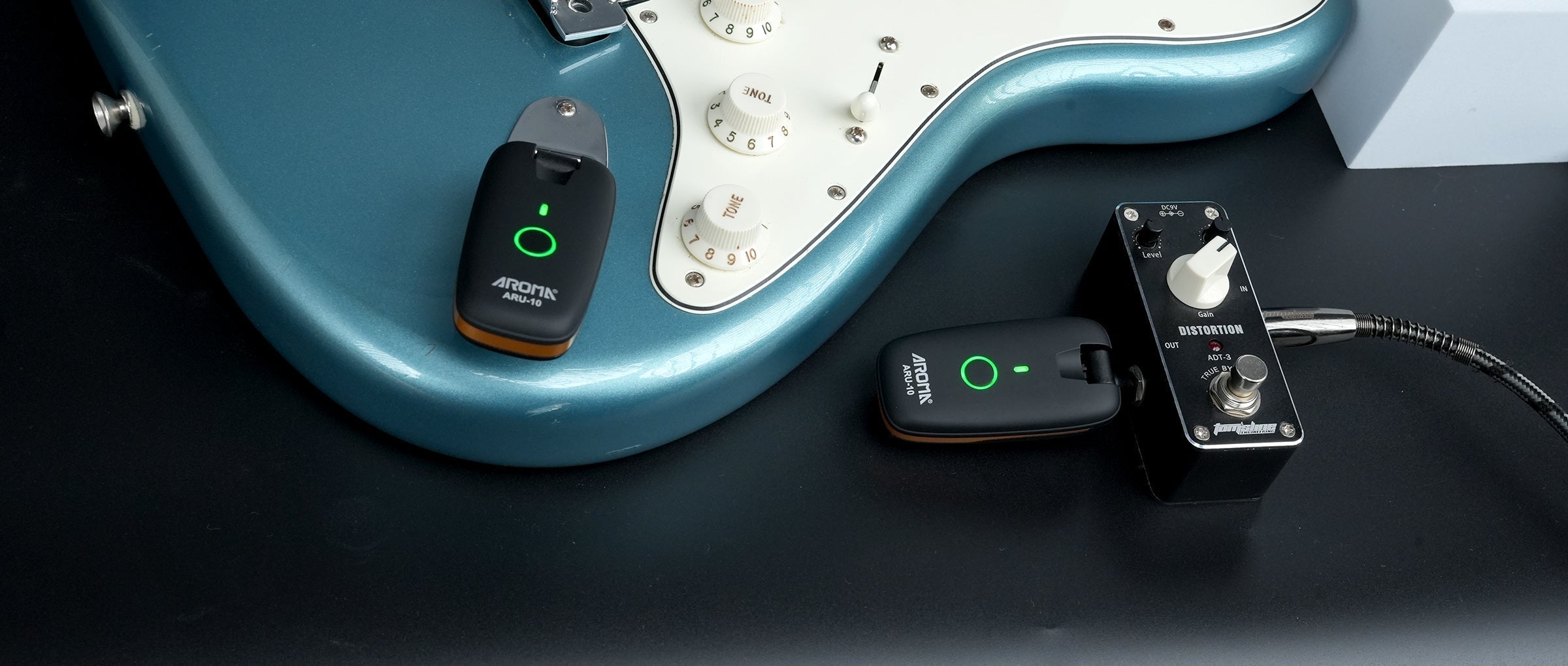
As digital effects pedals become more advanced and compact, many guitarists start asking the same question:
Will a wireless guitar system work properly with my digital pedals?
The short answer is: yes — if the wireless system is designed correctly.
Let’s break down what really matters.
Why Compatibility Matters More with Digital Pedals
Unlike analog pedals, digital effects processors are more sensitive to signal quality.
They rely on:
-
Stable input levels
-
Clean signal transmission
-
Low latency
Any signal loss, compression, or delay introduced before the pedal chain can affect tone, dynamics, and responsiveness.
That’s why not all wireless systems perform equally well with digital pedals.
Key Factors That Affect Compatibility
1. Signal Integrity (Tone Preservation)
A well-designed guitar wireless system should transmit:
-
Full frequency range
-
Natural dynamics
-
No audible compression
If your tone sounds different when switching from cable to wireless, the system is likely coloring the signal — which digital pedals will exaggerate.
Aroma guitar wireless systems are engineered to deliver a clean, uncompressed signal, making them ideal for modern digital effects chains.
2. Latency: The Silent Dealbreaker
Even small delays can feel unnatural when using:
-
Multi-effects processors
-
Amp modelers
-
Time-based effects
High-quality wireless systems keep latency so low that it feels identical to a cable.
If your playing feels “slightly behind,” the issue is usually latency — not your pedal.
3. Output Level Matching
Digital pedals expect a consistent input level.
A good wireless system should:
-
Match standard guitar cable output
-
Avoid sudden peaks or drops
-
Maintain signal stability even during fast playing
This ensures your effects respond exactly as intended.
Works Seamlessly with Popular Digital Setups
A reliable guitar wireless system pairs well with:
-
Digital multi-effects units
-
Amp modelers
-
Hybrid pedalboards (analog + digital)
-
Recording interfaces
If your setup works perfectly with a cable, it should work the same with wireless — when the system is properly designed.

Common Mistakes to Avoid
❌ Using low-quality wireless systems with digital pedals
❌ Ignoring latency specs
❌ Assuming all wireless units behave like cables
❌ Placing the receiver incorrectly on the pedalboard
Avoiding these mistakes prevents tone loss and performance issues.
Final Thoughts: Wireless Doesn’t Mean Compromise
Modern guitar wireless systems are no longer just about convenience — they’re about performance.
When paired with digital effects pedals, a high-quality wireless system delivers:
-
Cable-like tone
-
Instant response
-
Clean, reliable signal
👉 Aroma guitar wireless systems are built for modern pedalboards, offering low latency, stable transmission, and full compatibility with today’s digital effects.
If your rig has evolved, your wireless setup should too.

Share:
Why Wireless Mic Adapters Change the Way You Perform
What Does a Guitar Capo Do? A Simple Guide for Beginners